

 1-877-999-8489


2026
Winter Freight in Alberta: How Loads Keep Moving When the Temperature Drops
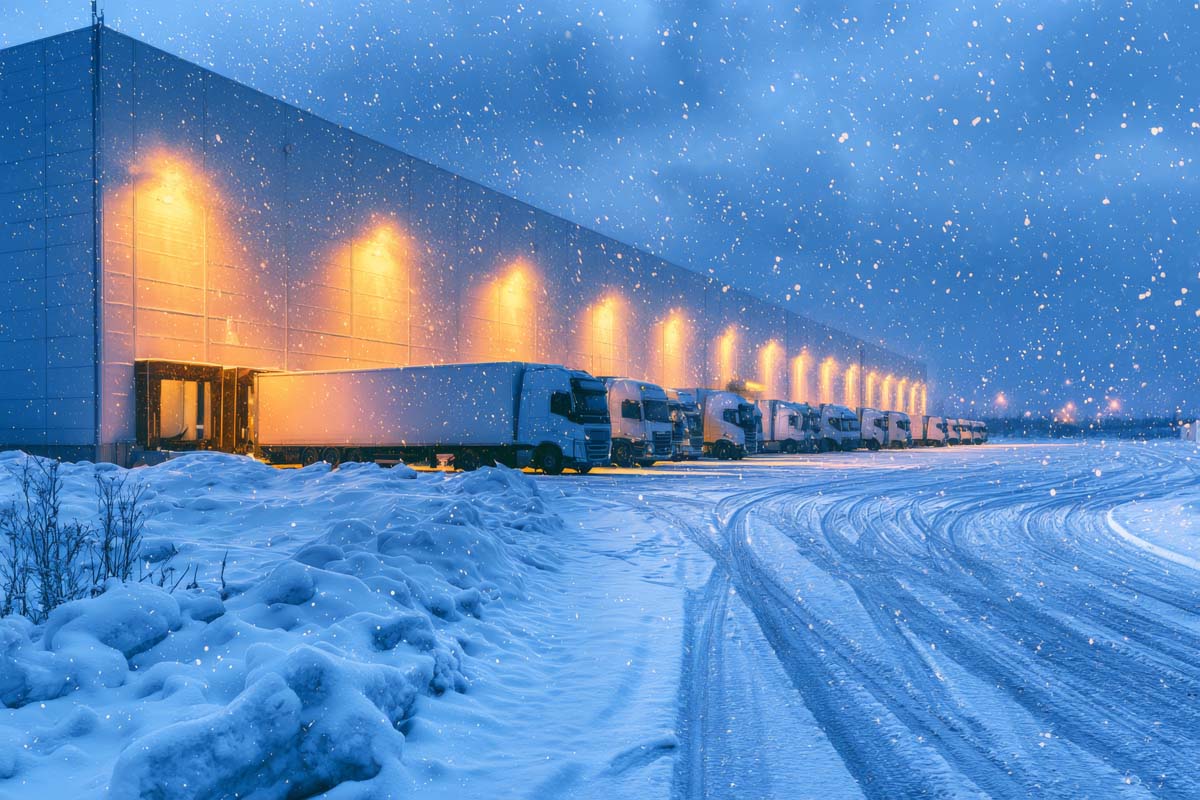
Every Albertan knows what minus 35 does to a car battery. Fewer people think about what it does to the trucks carrying the food, building materials and consumer goods that the province runs on.
Winter freight is a genuinely different operation from summer freight, and the difference is mostly invisible to the people receiving the goods. That is the point.
Cold is harder on equipment than distance is
Diesel gels as temperatures fall, which is why winter fuel blends and additives matter and why trucks get plugged in overnight rather than simply parked. Air brake systems accumulate moisture that freezes in the lines. Tire pressure drops with the temperature, affecting handling and wear. Batteries lose a substantial share of their capacity in extreme cold.
None of this is dramatic. It is a maintenance discipline that happens in a shop before the truck ever leaves, and a fleet that skips it spends the winter roadside instead of on the road.
Freight that freezes, and freight that must not
The counterintuitive part of Alberta winter logistics is that a great deal of it is about keeping things warm rather than cold.
Beverages, liquids, paints, adhesives, produce and many pharmaceutical and health products are damaged by freezing, and a trailer parked overnight in January is not a neutral environment. Several of the market sectors that move through Alberta most heavily are exactly the freeze-sensitive ones. Heated trailers exist for this reason, and the sequencing around them matters as much as the equipment. A load protected for the entire highway run and then left on an unheated dock for two hours can still be written off.
Dock design plays a part here that most people never see. Sealed doors, heated levellers and staging discipline all exist to keep the last twenty feet of the journey from undoing the rest of it.
Weather is a routing problem before it is a driving problem
The Trans-Canada through the mountain passes, Highway 2 between Calgary and Edmonton, and the secondary highways feeding smaller communities all behave differently in winter. Closures happen, and they happen with little notice.
What keeps freight moving is planning around forecasts rather than reacting to conditions. That means adjusted transit expectations, alternative routing identified in advance, and communication with receivers when a delivery window is going to move. An asset-based transportation operation has more control over that than a broker does, because the trucks and the dispatchers are the same company.
Why regional inventory matters more in winter
The strongest protection against winter disruption is not better trucks. It is having product closer to where it is needed before the weather arrives.
A business serving Alberta from a Lower Mainland warehouse is dependent on the mountain corridor every single week. The same business holding regional inventory in the Calgary area keeps serving customers through a closure, because the freight that matters is already on the correct side of the mountains.
That is the argument for regional distribution generally, and winter is when it stops being theoretical.
The people doing the work
Winter logistics runs on a fairly unglamorous set of habits. Drivers doing longer pre-trip inspections in the dark. Yard staff clearing snow from dock approaches before the first truck arrives. Dispatchers rerouting loads at five in the morning. Mechanics working through a shop schedule in October so that nothing surprises anyone in January.
Facilities with their own mechanic shop and wash bay on site have an advantage here, because a truck with a problem gets seen the same day rather than waiting for an appointment somewhere else during the busiest month of the year.
What it means for Alberta businesses
If your supply chain depends on freight arriving through an Alberta winter, two questions are worth asking before November. Does your carrier have the equipment and the maintenance programme for the conditions, and is your inventory positioned somewhere a highway closure cannot cut off.
Pacific Coast Distribution operates a 60,000 square foot food grade facility in Rocky View County with an asset-based fleet and an 8 acre secure yard. If you want to talk through winter readiness, our Calgary team is happy to have the conversation. Call 1-877-999-8489.