

 1-877-999-8489


2026
When Does FTL Transportation Make Sense?
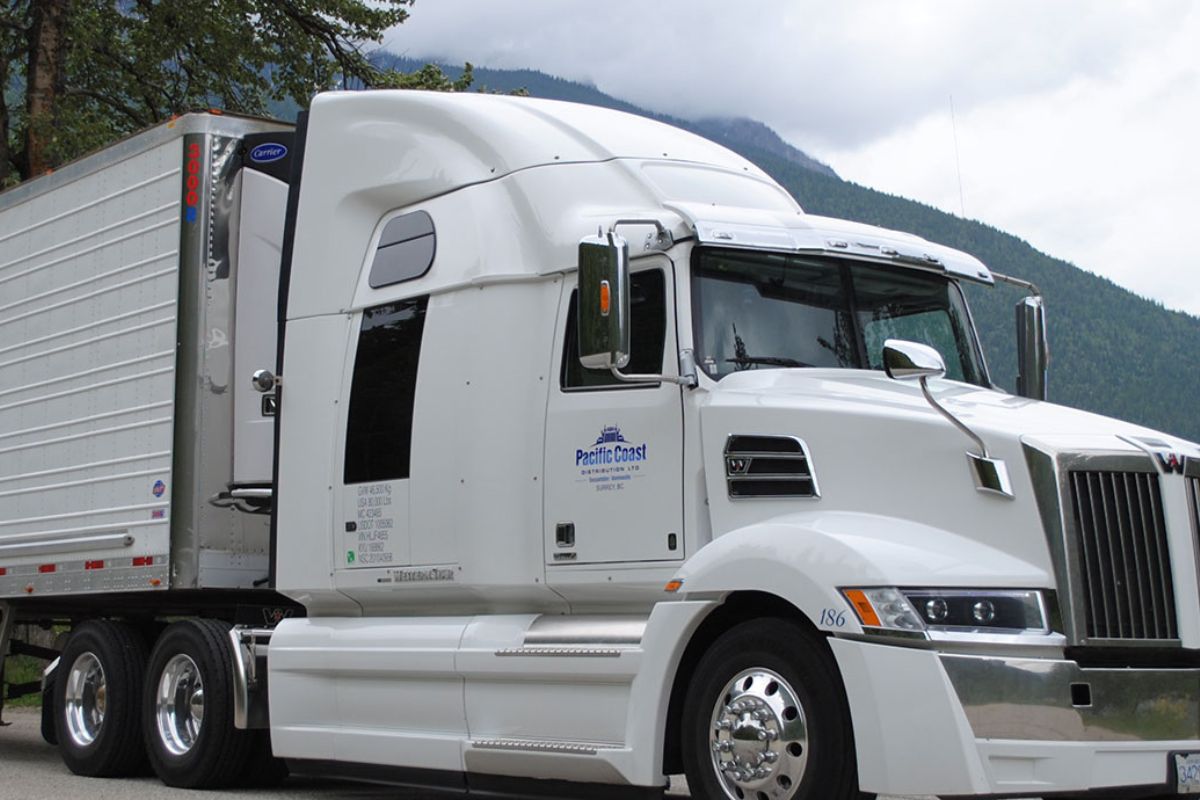
Full truckload is the simplest freight product to buy and the easiest one to buy at the wrong time. You reserve a trailer, your freight is the only thing on it, and it travels directly from pickup to delivery.
That simplicity is worth a great deal in the right circumstances and is pure waste in the wrong ones. Here is how to tell which situation you are in.
The Volume Threshold, and Why It Is Only a Starting Point
The conventional rule of thumb puts the crossover somewhere around six to twelve pallets, or roughly 5,000 to 10,000 kilograms. Below that, LTL usually wins on cost. Above it, you are often paying LTL rates on enough freight that a dedicated trailer would have been cheaper.
Treat that as a prompt to compare rather than an answer. The actual crossover moves with the lane, the season, the density of the freight and current capacity in the market. The useful habit is to price both ways whenever a shipment sits anywhere near that range, because the assumption that LTL is always cheaper for smaller freight stops being true sooner than people expect.
Handling Is the Argument Most Shippers Miss
Cost gets the attention. Handling is frequently the better reason to choose a truckload.
LTL freight moves through terminals. It is loaded, unloaded, cross-docked and reloaded, sometimes several times between origin and destination. Every one of those touches is a chance for damage, for a pallet to be mis-sorted, or for a load to be restacked by someone who does not know what is in the cartons.
A full truckload is loaded once and unloaded once. For fragile goods, high-value inventory, awkwardly shaped freight or anything where presentation matters on arrival, that difference is worth paying for even when the trailer is not full.
Signals That Point Clearly to FTL
Several conditions make the decision straightforward:
- Volume that genuinely fills most of a trailer, where paying per pallet no longer makes sense
- Fragile, high-value or easily damaged freight that should not be handled repeatedly
- Tight or guaranteed delivery windows, including retail appointments with chargebacks attached
- Temperature-controlled loads, where every terminal transfer is a chance for an excursion
- Oversized or irregular freight that cannot be safely loaded alongside other shipments
- Regulated goods requiring specific handling and documentation
- Security-sensitive cargo, or cross-border freight where a sealed trailer simplifies the process
That last pair deserves a note. We are CTPAT and PIP registered, which matters for freight crossing into the United States, and we are equipped for dangerous goods and limited quantity transportation, which is not something every carrier can accept.
Transit Certainty Is Its Own Product
A truckload moves on one schedule with one driver. There is no terminal network between pickup and delivery, which means fewer variables and a transit time you can commit to a customer.
For businesses delivering into retail distribution centres, that reliability is not a luxury. Missed receiving appointments produce chargebacks, and enough of them affect the commercial relationship well beyond the cost of the individual penalty. In those situations the premium for a dedicated trailer is cheap insurance.
The same logic applies to production inputs. If a late delivery stops a line or idles a crew, the freight saving from a cheaper mode disappears in the first hour of downtime.
When FTL Is the Wrong Call
Being honest about this matters, because the failure mode is expensive and common.
If your volume is genuinely small and your demand is lumpy, booking truckloads means paying for empty space on a regular basis. Businesses sometimes respond by holding freight until they have enough to fill a trailer, which trades a freight cost for an inventory and service cost that is usually larger. Customers wait, cash sits in stock, and the saving on paper does not survive contact with the income statement.
Partial truckload sits between the two and is worth asking about. Your freight travels with one or two other shipments rather than the dozens on a typical LTL run, so you get fewer touches than LTL at a lower cost than a dedicated trailer.
Questions to Settle Before You Book
Working through the following usually makes the decision obvious:
- What is the actual weight, and what are the real dimensions of the stacked load
- How many pallet positions does it occupy, and can anything be stacked on it
- Does the delivery have a fixed appointment, and what happens if it is missed
- Can the freight tolerate being handled four or five times
- Does it require temperature control, security, or dangerous goods documentation
- Is there a dock at both ends, or will special equipment be needed
- How predictable is this shipment, and will it repeat on a schedule
That last question often reframes everything. Freight that repeats on a consistent lane can be planned around, and planned freight is cheaper than reactive freight in every mode.
Talk to Our Calgary Team
Pacific Coast Distribution has served Western Canada for over two decades from facilities in Langley and Calgary. Our Rocky View County site runs 60,000 square feet of ambient food grade warehouse space, 17 dock level doors, an 8 acre secure yard, and our own mechanic shop, which keeps the asset-based fleet running rather than waiting on an outside shop.
Tell us the lane, the freight and the timing, and we will tell you honestly which mode fits. Call 1-877-999-8489 or request a rate quote.