

 1-877-999-8489


2026
What Food Grade Warehousing Actually Requires, and How to Vet a Calgary Provider
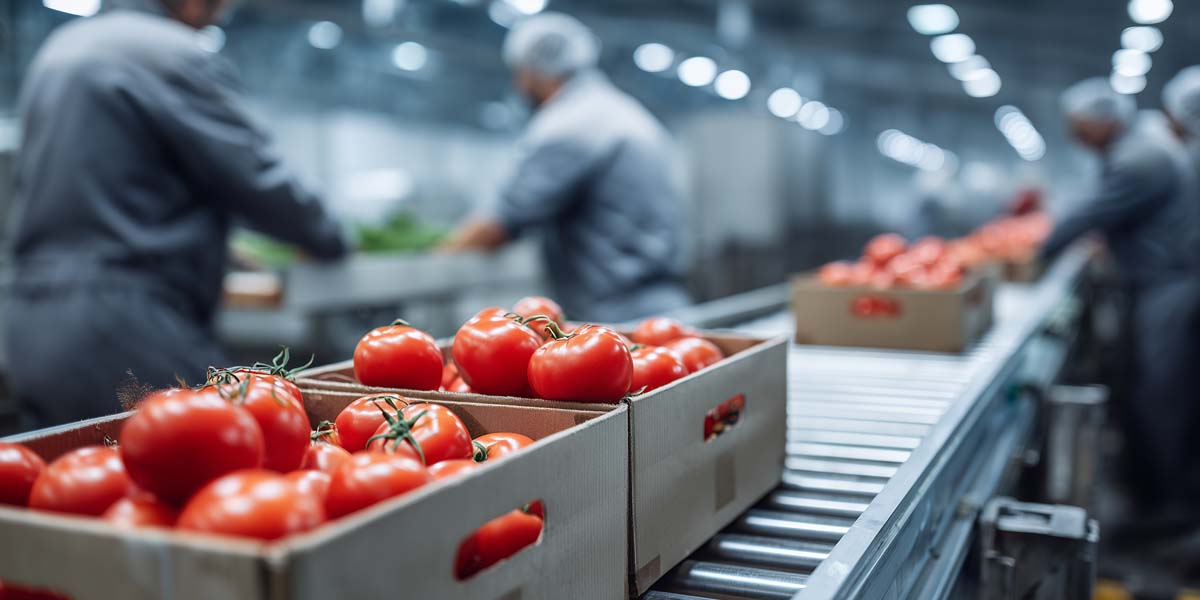
Plenty of warehouses will tell you they can store food. Considerably fewer can show you the documentation that makes that claim mean anything, and the gap between the two is where food businesses get into trouble.
The term food grade is not regulated as a label. What is regulated is the conduct: the licensing, the preventive controls, the traceability and the records that a food business has to maintain, and those obligations do not stop at the warehouse door. If your product sits in a third party facility, that facility is part of your food safety system whether or not anyone wrote it down.
Here is what the requirement actually consists of, and what to ask a provider before you move inventory.
The Federal Baseline
The Safe Food for Canadians Regulations set the framework. Depending on the activities a business carries out, including importing, exporting and sending food across provincial borders, a licence may be required, and the business has to have a written preventive control plan describing how food safety hazards are identified and controlled.
Traceability is the other pillar. A food business has to be able to identify where product came from and where it went, one step back and one step forward, and produce that information quickly. In a recall, quickly means hours rather than days.
That requirement is the one that most directly implicates the warehouse. If your provider cannot tell you which lot codes shipped to which customer on which date, you cannot meet your own traceability obligation, however good your internal records are. Lot level inventory control is not a nice feature in food warehousing. It is the point.
What Preventive Control Looks Like in a Warehouse
In a storage and distribution operation, the hazards are narrower than in a processing plant, which makes them easier to control and easier to neglect.
The physical hazards come first: contamination from the building, from pallets, from equipment, from pest activity, and from the handling itself. The environmental conditions come second, meaning temperature and humidity where the product is sensitive to either. Cross contamination is third, which in a mixed facility means keeping food separated from non-food chemicals, from products with strong odours, and from allergens where the risk exists. And then there is the documentation layer, which is what demonstrates that the first three were actually managed.
A HACCP-based approach is the structure this normally takes. Hazards are analysed, the points where control is critical are identified, those points are monitored on a defined schedule, limits are set, corrective action is defined for when a limit is exceeded, and all of it is recorded. In a warehouse the critical control points tend to be receiving inspection, storage conditions, sanitation and pest control, and shipping verification.
Our food grade warehousing in Calgary runs on that basis, with a 60,000 square foot sanitary ambient storage space, documented inflow and outflow of product, and a cleaning and sanitation schedule that staff are trained on rather than reminded about.
Certification, and What It Does and Does Not Tell You
Third party certification is the shortcut most food businesses use to assess a facility, and it is a reasonable one provided you read it properly.
SQF certification means the facility has been audited against a recognised food safety standard by an independent body. The standards recognised by the Global Food Safety Initiative, of which SQF is one, are the ones most retail and grocery buyers will accept, and for many buyers a certified facility is a precondition rather than a preference. If you are selling into national grocery, your warehouse's certification will come up in the vendor assessment.
What a certificate does not tell you is the scope. Certification applies to specified activities at a specified site, and a facility certified for storage and distribution is not thereby certified for repacking or processing. It also has a date. An audit from two years ago describes the facility as it was two years ago, under management that may have changed.
So ask for the certificate, and then ask two more questions: what activities the scope covers, and when the last audit was. A provider that answers both immediately is telling you something about how the facility is run. Ours are set out on our certifications and affiliations page.
The Questions That Separate Facilities
Beyond the certificate, a short list of specific requests will tell you more about a warehouse than any tour:
- The pest control program, including who provides it, the inspection frequency, and the last several service reports with any findings and the corrective actions taken
- The sanitation schedule, with evidence that the cleaning actually happens on it rather than being planned
- The allergen policy, and how segregation is handled where allergens and non-allergen products share a building
- Temperature and humidity monitoring records for the area your product would sit in, including what happens when a reading goes out of range
- The receiving inspection procedure, meaning what gets checked and recorded when a trailer arrives and what triggers a rejection
- The results of the most recent mock recall, with the time it took to trace product in both directions
- Chemical storage arrangements, and how non-food products are kept separated from food
- Staff food safety training, how often it is refreshed, and how it is documented
The mock recall is the single most informative item on that list. Every certified facility is supposed to run one. A provider who can produce last year's exercise with a trace time attached is demonstrating the whole system at once, because the exercise only works if the lot records, the inventory control and the shipping documentation all hold up.
Ambient, Chilled and Frozen Are Different Businesses
This distinction gets blurred in marketing and it matters enormously in practice.
Ambient food grade storage is a sanitary, pest-controlled, well-documented dry environment. It suits shelf stable product: packaged dry goods, canned and jarred product, beverages, confectionery, pet food, supplements and most consumer packaged goods. The controls are about contamination, housekeeping and traceability rather than refrigeration.
Chilled and frozen storage is a different operation with different equipment, different monitoring, different alarm and backup requirements and different cost. A facility offering ambient storage is not deficient for doing so. It is simply the wrong place for product that needs temperature control, and a provider who is straightforward about which one they run is worth more than one who is vague about it.
Our Calgary facility is ambient. If your product needs refrigeration, we would rather tell you that at the first conversation than after it arrives.
Inventory Control Is Where Food Warehousing Is Won
Most food product has a date on it, and the operational discipline that follows from that is what distinguishes a food warehouse from a warehouse that happens to hold food.
Rotation has to be enforced rather than intended, whether that is first in first out or first expired first out, and it has to be enforced by the system rather than by whoever is on the forklift. Lot codes have to be captured at receipt and carried through to the shipment, so that a trace can be run in either direction. Short-dated stock has to be visible before it becomes a write-off rather than after. And the count has to be right, because a food recall executed against inaccurate inventory records is a recall that does not contain the problem.
This is ordinary inventory management work, done with more precision than a general freight operation needs. It is also the part that is hardest to retrofit, which is why it is worth asking about before committing product.
Practical Matters for Calgary Food Businesses
A few local considerations come up regularly.
Winter is the first. Product arriving in an unheated trailer in January can be affected before it reaches the dock, and canned and bottled goods in particular do not tolerate freezing. Receiving procedures that include checking the condition of inbound freight in cold weather, and a dock arrangement that does not leave product standing outside, are worth confirming.
Seasonality is the second. Food and beverage demand in Alberta has pronounced peaks, and storage requirements move with them. Flexibility on space matters more in this category than in most.
Arrangements covering both shorter and longer commitments are what make that workable. Our short term and long term storage is structured so that a seasonal peak does not require committing to year-round space.
Third, if you are selling into grocery or club retail in western Canada, expect your warehouse to be assessed as part of your vendor approval. Having a certified facility with current documentation removes a line of questioning entirely.
Talk to Our Calgary Team
Pacific Coast Distribution has operated since 1999, with facilities in Langley and Calgary. The Calgary site at 510 Carmek Blvd SE in Rocky View runs 60,000 square feet of sanitary ambient food grade warehousing with SQF and HACCP certification, 24/7 monitored surveillance, and our own transportation on the same site.
Tell us what your product is, what volume you hold and where it ships, and we will tell you honestly whether we are the right facility for it. Call 1-877-999-8489 or request a rate quote.