

 1-877-999-8489


2026
Temperature-Controlled Logistics in Calgary for Perishable Goods
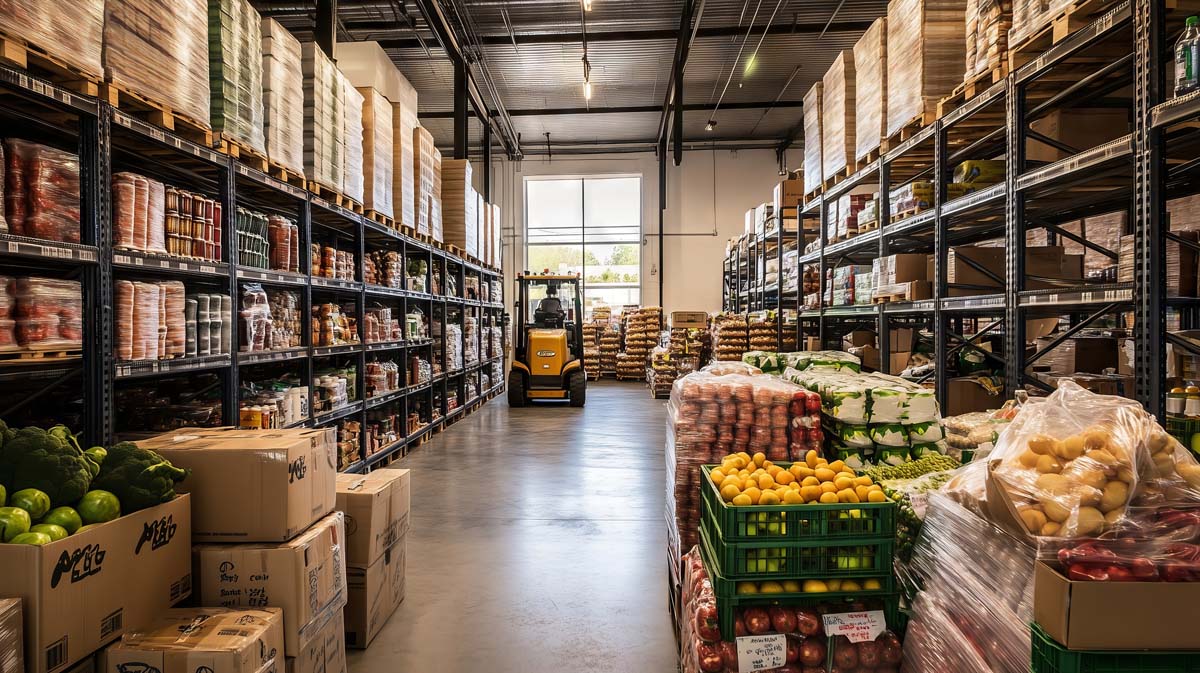
Most people think about cold chain as a summer problem. Keep the product cool, watch the trucks in July, worry about the heat.
In Calgary, the more expensive failures happen the other way around.
A pallet of beverages left in an unheated trailer overnight in January will freeze. Cans deform, glass cracks, emulsions separate, and product that was perfectly good at five in the afternoon is a write-off by morning. Fresh produce suffers chill injury well above freezing. Some pharmaceutical and personal care products fail permanently after a single excursion in either direction, without any visible sign that anything went wrong.
Alberta's climate swings roughly seventy degrees between a July afternoon and a January night. Cold chain here is not about keeping things cold. It is about holding a defined range in a place that will not cooperate.
Define the Range Before You Shop for a Warehouse
Temperature controlled is not a specification. It is a category, and it covers conditions that have almost nothing in common.
Frozen storage generally sits at minus eighteen degrees Celsius or below. Refrigerated or cooler space typically runs between two and eight. Chill or cellar conditions for certain beverages and produce sit around ten to fifteen. Climate controlled or tempered space simply keeps product above freezing and below summer highs, which is often exactly what a beverage or personal care product needs and is far cheaper than refrigeration.
A surprising number of businesses pay for refrigerated space when tempered space would meet their specification, because nobody ever wrote the specification down. Get it in writing from your product or quality team: the acceptable range, the absolute limits, whether brief excursions are tolerable, and what humidity requirements apply. That document determines everything else, including what you should be paying.
Then confirm the facility can actually hold that range in both seasons. A building that maintains four degrees in August is not necessarily a building that maintains four degrees at minus thirty five outside, and the equipment involved is different. Ask specifically about food grade warehousing capability and how the site is certified, because in this category the certification tells you as much about the operating discipline as about the temperature.
The Dock Is Where Cold Chain Actually Breaks
Storage temperature is the part everyone measures. The transfers are the part that fails.
Product moves from a trailer, across a dock, into a storage zone, and eventually back out again. Each transfer exposes it to ambient conditions, and in Calgary the ambient conditions at a dock door in January are brutal. A pallet sitting in a staging lane for twenty minutes while paperwork gets sorted can drop several degrees in the outer cases, and the cases in the middle of the pallet will not recover for hours.
Facilities built for this manage the transfer deliberately. Insulated dock seals and shelters that close the gap between trailer and building. Temperature-controlled dock areas rather than a heated warehouse opening onto an unheated bay. Staging protocols that limit exposure time and are actually enforced during busy shifts, not just written in a procedure.
Ask to see the dock in person, and ask what the exposure time limit is. If nobody can quote a number, there is not a limit.
Product that does not need to be stored at all should not be. Moving temperature-sensitive freight straight from inbound to outbound through cross docking removes two transfers from the journey, which is two fewer opportunities for an excursion.
Monitoring Is Only Useful If It Produces Evidence
Every cold storage facility monitors temperature. The distinguishing question is whether they can prove what the temperature was.
Ask about probe placement, which should reflect the actual product zones rather than a convenient wall in the office. Ask about logging frequency and how long data is retained, because a customer or a regulator may ask you for records from a year ago. Ask about alarm thresholds, who receives the alert at two in the morning on a Sunday, and what the documented response looks like.
Then ask the question that separates serious operations from the rest: what happens after an excursion. The right answer is that affected product goes on hold, the deviation is documented with duration and magnitude, and the disposition decision comes back to you as the product owner. A facility that would quietly assess it themselves and carry on has told you everything you need to know.
Traceability sits alongside this. Lot-level tracking, first expired first out picking rather than plain first in first out, and the ability to trace a lot forward to every customer who received it are not optional for perishable goods. If a recall happens, that trace needs to run in hours.
Transport Is Part of the Chain, Not a Separate Service
A perfectly maintained warehouse hands product to a truck, and at that moment the chain is only as good as the equipment it is riding on.
For Alberta lanes, that means reefer units that heat as well as cool, because in winter the requirement is usually protection from freezing rather than from heat. It means equipment that gets maintained, because a reefer that fails at minus thirty on the QE2 is a total loss rather than an inconvenience. It means drivers who understand that a temperature-controlled load cannot sit at a truck stop with the unit off while they take a break.
Handoffs are the risk point again. Every carrier change is a gap in the chain of custody and a gap in the temperature record. Keeping warehousing and transportation with one provider means the record is continuous and the accountability is unambiguous, which matters enormously when a customer asks what happened to a shipment.
Delivery windows matter more in this category too. A refrigerated load arriving outside a receiver's hours may sit on a dock, and the whole careful chain ends in a parking lot.
Get the Specification Right, Then Get the Partner Right
Perishable logistics rewards precision and punishes assumptions. The businesses that lose product are rarely the ones with no cold chain. They are the ones with a cold chain that was never specified properly and has a gap nobody looked for.
At 18 Wheels Warehousing and Trucking, our Calgary facility in Rocky View County offers more than 200,000 square feet of food-grade capable space, over 30 loading docks, a gated yard, and temperature-appropriate storage backed by our own trucking fleet and a national network of warehouses. Product stays under one accountable chain from receiving through delivery.
If you are moving perishable or temperature-sensitive product through Alberta, send us your specification and we will tell you honestly whether we are the right fit.