

 1-877-999-8489


2026
Supporting Alberta-Based Food Brands Through Integrated Logistics
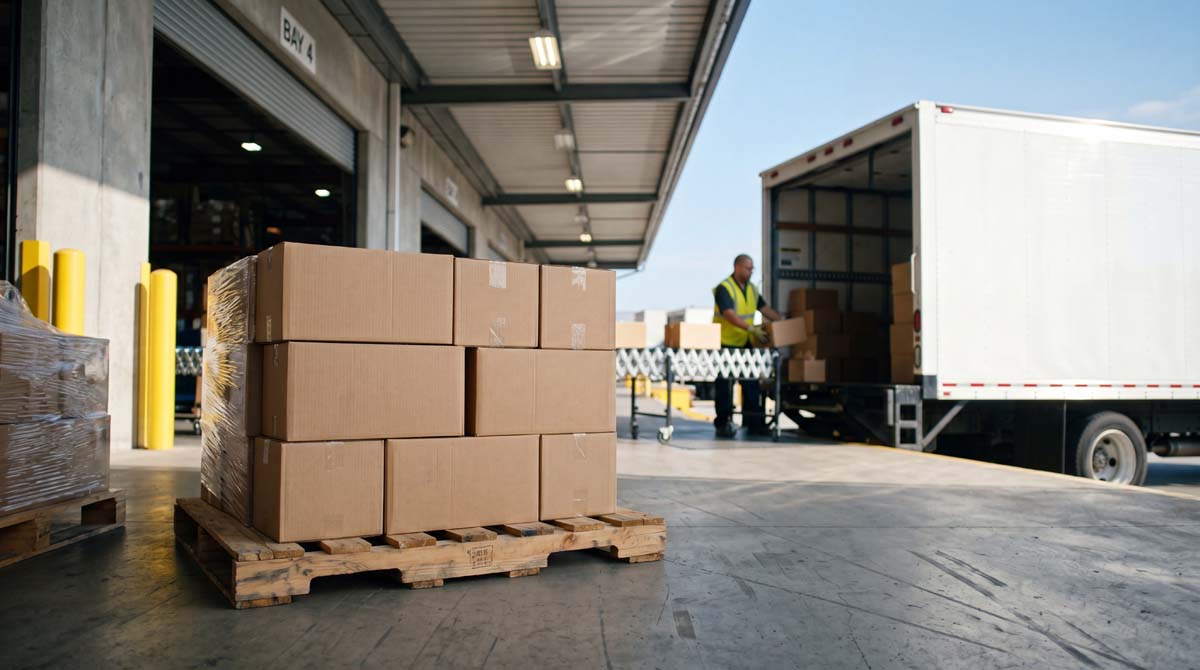
There is a moment in the life of most Alberta food brands that decides whether the business becomes a real company or stays a very good side project.
It arrives as an email from a retail buyer. They want the product in stores. Not one store, which the founder could service personally, but a region, with a listing date, a distribution centre to deliver into, a routing guide, and a set of requirements written by someone who assumes the supplier already knows how all of this works.
The product is ready. The brand is ready. The logistics almost never are, and that gap is where good Alberta food companies lose opportunities they had genuinely earned.
Retail Compliance Is a Logistics Problem, Not a Paperwork Problem
The routing guide is where most first-time suppliers get hurt, because it reads like administration and behaves like a contract.
It specifies how product must be palletised, how cases must be labelled, what barcodes must appear where, how advance shipping notices are transmitted, when the delivery appointment must be booked, and what happens when any of that is wrong. What happens is a chargeback, deducted from your invoice without discussion, and the amounts are not trivial. A supplier who ships three non-compliant loads can lose the entire margin on the order.
Almost none of these requirements have anything to do with your product. They are about whether your operation can execute to a standard. And they are entirely learnable, which is the good news, provided you learn them before the first shipment rather than through deductions.
This is one of the clearest arguments for working with a warehouse that already services national retailers. The pallet configurations, the label placement, the ASN transmission, and the appointment discipline are routine work in a facility that does them daily. Getting warehousing support from a team that already knows the requirements removes an entire category of expensive first-year mistakes.
Certification Is the Gate, and It Opens Slowly
Most Canadian grocery retailers require their suppliers to hold recognised food safety certification, and that requirement extends to where the product is stored.
You can hold every certification a producer needs and still fail a supplier audit because your storage facility does not meet the standard. Retailers are looking at the whole chain, and a gap anywhere in it is a gap in their risk.
The practical implication for a growing Alberta brand is that facility choice is part of your retail readiness, not a downstream detail. A food-grade facility brings documented sanitation programs, pest control, allergen segregation, temperature monitoring, lot-level traceability, and the records to demonstrate all of it under audit. Building that yourself takes a year and meaningful capital. Renting access to it takes a phone call.
It also protects you in the situation nobody plans for. If a recall becomes necessary, the ability to trace a lot forward to every customer who received it, within hours, determines whether you have a contained problem or a public one. Proper food grade warehousing makes that trace routine.
Packaging Is Where Small Brands Punch Above Their Weight
Retail programs rarely want the product exactly as it comes off your line.
They want a multipack for a promotion. A variety pack combining flavours. A display pallet built to a specific planogram for an end cap. Bilingual labelling that meets Canadian requirements. Seasonal packaging for a twelve-week window, and then never again.
Building that capability in house means buying equipment for work that runs intermittently and pulling production staff onto it during the busiest weeks of the year. Most small food brands do the first program by hand, count the hours afterwards, and start looking for a different approach.
Handling it downstream at the warehouse solves the problem cleanly. Product ships from your facility in standard cases, and the co-packing work happens where the equipment and labour already exist. Your production run never changes format, and the retailer receives exactly what they specified. For a brand competing against national companies with their own packaging lines, this is one of the few places where renting scale genuinely levels the field.
Distribution Decides Which Provinces You Can Realistically Serve
Alberta is a good place to build a food brand and a challenging place to distribute from if you only have one location.
Calgary reaches a great deal of the country efficiently. Edmonton is under four hours, Saskatoon and Regina are comfortable day runs, Vancouver is overnight, and the US border to the south is close. That covers Western Canada well. Ontario and Quebec, where most Canadian consumers live, are several days away by truck and expensive to serve in partial loads.
Growing brands hit this wall at a predictable point. Eastern orders start arriving, freight costs on those orders look terrible, delivery times disappoint customers, and the brand either absorbs the cost or slows its own growth.
The solution is positioning rather than shipping harder. Holding inventory closer to eastern customers turns a multi-day expensive delivery into a next-day affordable one, and it does not require a second lease if the warehouse network already exists. Our warehouse locations across the country let an Alberta brand serve national retail without building national infrastructure.
Fewer Handoffs Means Fewer Places to Fail
The thread running through all of this is integration.
A brand that uses one company for storage, another for packing, another for freight, and another for customs is managing four relationships and owning every gap between them. When a retailer delivery goes wrong, nobody is responsible for the total outcome, and the brand spends its time coordinating instead of selling.
Bringing warehousing, co-packing, and transportation under one provider does not just simplify the admin. It shortens the chain of custody, keeps traceability continuous, and means one phone call rather than four when something needs to change.
18 Wheels Warehousing and Trucking has supported Canadian food and beverage businesses since 1989. Our Calgary facility in Rocky View County offers more than 200,000 square feet, over 30 loading docks, a gated yard, food-grade and bonded storage, and co-packing on site, connected to a national warehouse network and our own trucking fleet.
If your brand is heading into retail and you want the logistics side ready before the first purchase order, get in touch with our Calgary team.