

 1-877-999-8489


2026
Repacking and Multi-Pack Services in Calgary for Retail Distribution
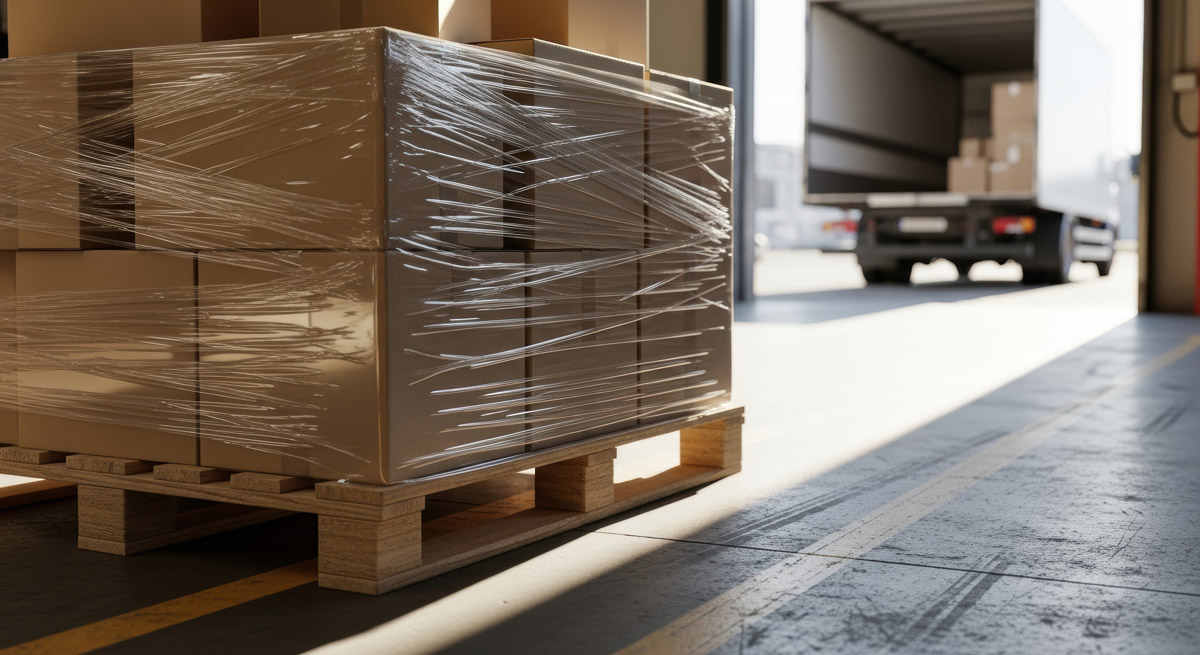
A product that is finished at the plant is rarely finished for the shelf. One retailer wants a four-pack, a club chain wants a twelve, a promotion needs a variety pack that does not exist as a production run, and a buyer has asked for a floor-ready display by the end of the month.
Running every one of those configurations through the manufacturing line is possible and usually uneconomic. Short runs interrupt production, tie up a line that should be making product, and force a decision about pack format months before anyone knows what will sell. Repacking at the warehouse exists to move that decision later and make it cheaper.
Why Retail Distribution Creates So Many Pack Formats
The proliferation is not arbitrary. Each channel has its own economics, and the pack follows them.
Grocery wants a case size that fits the planogram and turns at the right rate. Club and warehouse formats want a larger multi-pack with a lower per-unit price, because that is their entire proposition. Convenience wants a small count that fits a limited shelf. A promotional period might require a bonus pack, a cross-merchandised bundle with a complementary item, or a seasonal graphic that is worthless the following month. Online channels want a shipper carton that survives a parcel network without an outer case.
One product can easily end up with six or seven live configurations, several of which are temporary. Treating each as a production variant is how a manufacturer ends up with obsolete packaging inventory and a line that never runs long enough to be efficient.
Postponement, and Why It Saves Money
The principle underneath warehouse repacking has a name in supply chain planning. Postponement means holding product in its most flexible form for as long as possible and committing it to a specific format only when real demand appears.
In practice that means storing bulk cases and building the multi-pack, the variety pack or the display when the order is in hand. The inventory risk drops immediately, because unsold stock is still generic product rather than a retailer-specific pack nobody else can take. Repacking at the warehouse is what makes that possible, since the product is already in the building where the work happens.
The freight saving is secondary but real. Product that travels from the plant to a separate co-packer and then to a distribution warehouse pays for two extra moves and an extra handling cycle. Doing the work where the inventory already sits removes both.
What the Work Involves
Co-packing covers a wider range of tasks than the name suggests, and the right question is which of them a provider can actually do on site:
- Multi-pack assembly into retailer-specific counts, built by automated line or by hand depending on volume and product
- Variety and bundle packs combining several SKUs into one sellable unit, including cross-promotional pairings
- Shrink and bundle wrapping, with print-register film where the graphics have to line up
- Stickering and labelling, including price marking, retailer barcodes, country of origin and bilingual label application
- Pallet displays and floor-ready shippers assembled to a retailer's specification
- Rework and relabelling when a label is wrong, a date code changes or a product needs to move between channels
That last item is the one businesses discover they need in a hurry. A labelling error found after production is a write-off if there is nowhere to rework it and a day of labour if there is.
Compliance Is the Part That Catches People Out
Canadian retail has two layers of requirements, and failing either one stops a shipment.
The federal layer applies to the product. Consumer goods sold in Canada carry mandatory label information in both English and French, with rules on net quantity declaration and country of origin, and food products add their own requirements on top. A pack assembled for a Canadian retailer has to satisfy all of that, and a pack imported in a configuration built for another market usually does not.
The retailer layer applies to the shipment. Major chains publish detailed routing and packaging guides covering case markings, pallet height and pattern, label placement and advance shipping notice data. These are enforced through deductions rather than conversation, which is why stickering and labelling done to the retailer's actual specification is worth more than it appears on a quote.
A co-packer that already works to those guides for other clients will catch problems before they ship. One that follows your instructions literally will ship exactly what you asked for, including the mistake.
Questions Worth Asking a Co-Packing Provider
Capability claims are easy to make, so the useful questions are specific.
Ask whether the space is food grade and what certification supports that, if any of your products are edible. Ask what the minimum run is, because a provider geared to pallet volumes will price a short promotional run badly. Ask about lead time from approved artwork to finished pallets, and what happens to that lead time in the fourth quarter when everyone wants displays. Ask whether the work happens in the same building as the stored inventory or whether product gets trucked to a second site. Ask how rework is handled and quoted, since it is the service most often needed at short notice.
Finally, ask what the quality check looks like. A count error in a multi-pack reaches a consumer. The cost of catching it in the warehouse is trivial compared with the cost of a retailer catching it.
Where the Volumes Favour Automation
Hand assembly is flexible, scales down to very small runs and gets expensive at volume. Automated lines reverse all three properties. Businesses usually need both, and the useful provider is one that can move a program between them as it grows rather than quoting the same method regardless.
For steady retail programs, automated multi-pack assembly is normally the lower cost per unit by a wide margin. For promotional work, seasonal variety packaging and anything with an uncertain forecast, hand assembly keeps the commitment small enough that an unsuccessful promotion is not an expensive mistake.
Our Calgary Co-Packing Operation
18 Wheels has been warehousing, co-packing and moving freight for Canadian businesses since 1989. Our Rocky View County facility runs over 200,000 square feet of warehousing with more than 30 loading docks, food grade and temperature-controlled space, and a gated yard, with co-packing carried out in the same building the inventory is stored in.
That matters for Calgary manufacturers and for national brands serving western retail, because the pack gets built after the order exists and ships without an extra freight leg. Tell us the product, the retailer and the configurations you need, and we will tell you what it costs and how quickly it can run. Call 587-332-5252 or request a quick quote.