

 1-877-999-8489


2026
Racked or Non-Racked Storage: Matching the Right Setup to Your Product
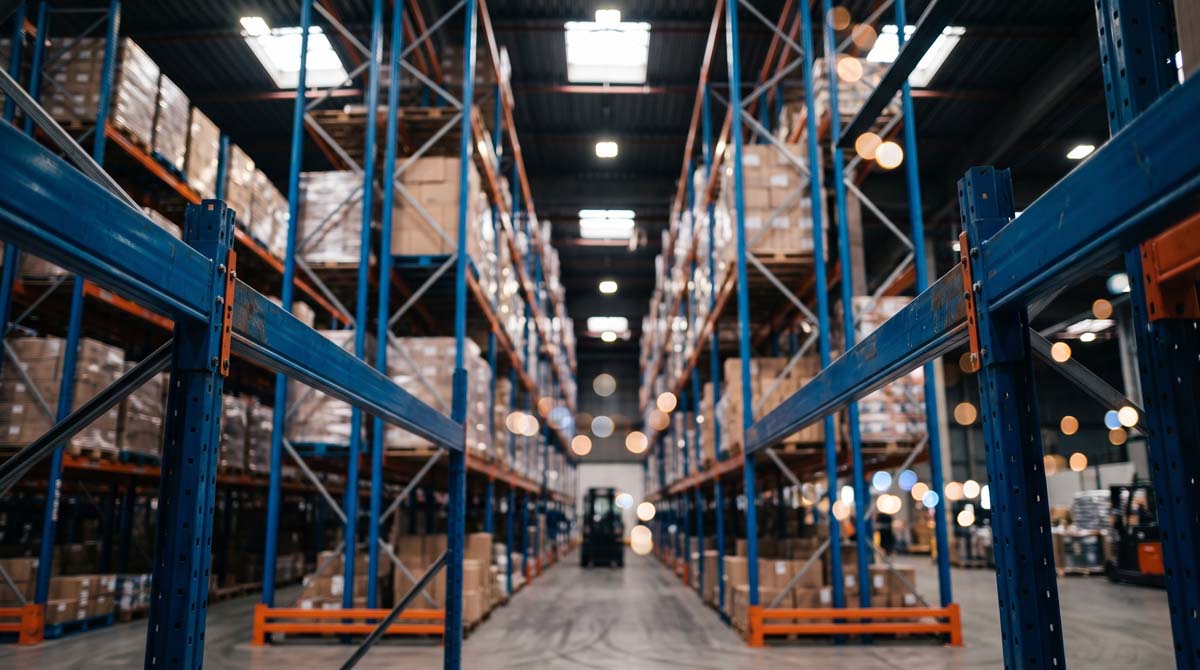
Warehouse quotes usually arrive as a price per pallet per month, which makes the storage decision look simpler than it is. How your product is actually stored affects what you pay, how fast it moves, and in some cases whether it survives storage at all.
The first fork in that decision is racked versus non-racked. Here is how to tell which one your product wants.
What each one actually means
Racked storage puts pallets into a structural racking system, with each pallet in an addressable position. Our Calgary facility runs double deep racking under a 32 foot ceiling, which means vertical space does most of the work and every pallet has a location a system can point to.
Non-racked storage is floor storage, with pallets block stacked or set in rows directly on the slab. It uses the footprint rather than the height, and it trades individual accessibility for density.
When racking is clearly right
Racked storage suits products where any given pallet may need to come out at any time. That covers most operations with more than a handful of SKUs, anything with lot codes or expiry dates that need rotating in order, and product that cannot bear the weight of another pallet on top of it.
It also suits anything where picking speed matters. A racked position can be reached without moving three other pallets first, which is the difference between an order going out this afternoon and going out tomorrow.
When floor storage makes more sense
Non-racked storage earns its place with high volume, low SKU count product that moves in and out in full lots. Beverage in season, a single product line arriving by container, seasonal inventory staged for one large outbound release.
If the whole lot ships together and nothing underneath needs to come out first, block stacking is denser and usually cheaper. It also handles product that simply does not fit a standard pallet position, which is where oversized and irregular freight ends up.
The questions that decide it
When you are scoping storage for a new product line, the answers below settle the question quickly:
- How many SKUs are you storing, and how often does each one move
- Do you ship full pallets, mixed pallets, or cases
- Does the product require first in first out rotation by lot or expiry
- Can the packaging support the weight of stacked pallets without crushing
- Is the product a standard pallet footprint, or oversized
- How long will it sit, on average
- Do you need to see individual pallet locations in an inventory system
The stacking question is the one people get wrong most often. Packaging designed for shipping is not always designed for sustained compression, and a bottom layer that has been carrying weight for four months is a claim waiting to happen.
Most operations use both
The useful answer for many businesses is a split. Fast-moving and pick-sensitive product goes into racking, while bulk reserve stock sits on the floor and replenishes the racked positions as they empty. That gets you the density on the slow inventory and the accessibility on the inventory that actually moves.
Getting that split right depends on knowing your own movement data, which is where inventory management with real visibility earns its keep. Without it, the split is guesswork, and guesswork tends to put the wrong things in the expensive positions.
Where storage trailers and yard space fit
Two options sit outside the racked and non-racked question entirely. Storage trailers provide flexible capacity that can be parked on your lot or ours, which suits overflow and seasonal surges without committing to more warehouse space. Secure yard storage handles containers, equipment and anything that belongs outdoors on a monitored site.
Both are worth considering before signing up for more indoor space than you need year round.
Talk to our Calgary team
Pacific Coast Distribution runs a 60,000 square foot ambient, food grade facility in Rocky View County with 17 dock level doors, an 8 acre secure site, and both racked and non-racked capacity. Tell us what you are storing and how it moves, and we will recommend the setup rather than quote you a generic pallet rate. Call 1-877-999-8489 or request a quote.