

 1-877-999-8489


2026
Appliance Warehousing Best Practices: Preventing Damage from Dock to Door
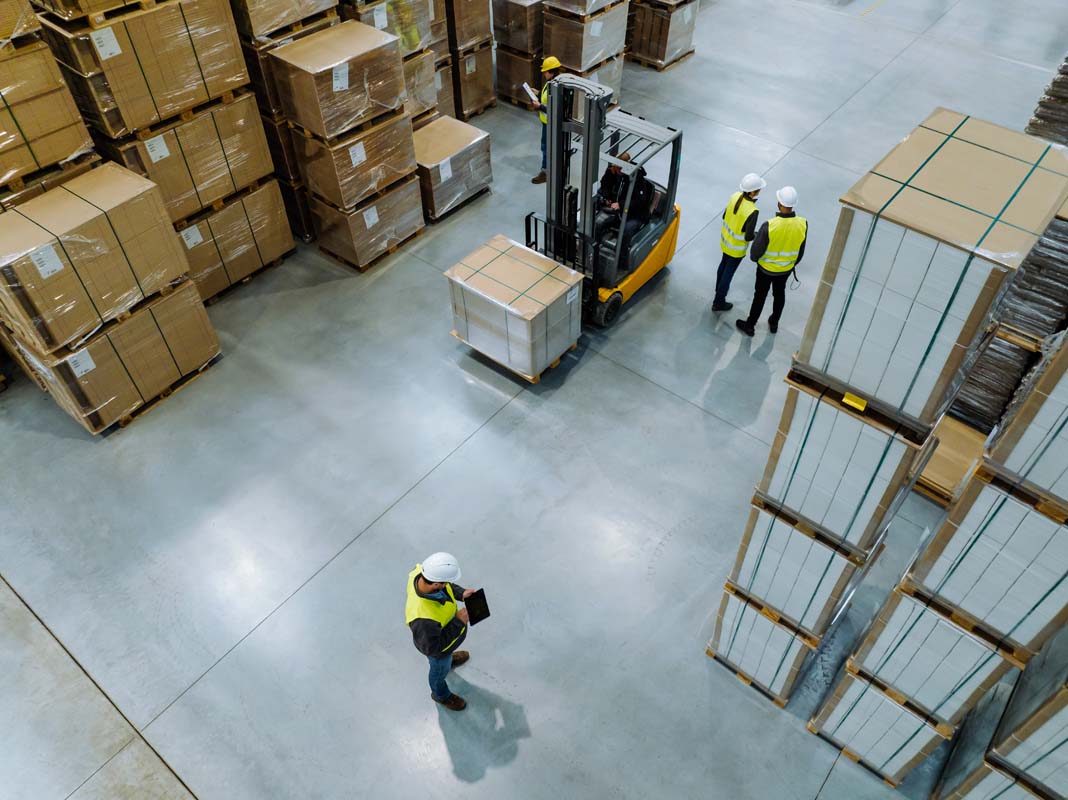
A scratched refrigerator panel is worth almost nothing.
That is the uncomfortable economics of appliance distribution. The unit still works perfectly. Every component functions. But a visible dent on a door or a scuff on a stainless finish turns a full-margin product into a scratch-and-dent sale, and the loss falls on whoever handled it last. In a category where damage rates of two or three percent are common and margins are thin, handling quality is not a service detail. It is the business case.
Appliances are also genuinely awkward to warehouse. They are tall, top-heavy, unevenly weighted, and packaged in cartons designed to protect against vibration rather than against a forklift tine. What follows is what consistently separates facilities that damage appliances from facilities that do not.
Inspect at Receiving, Because After That It Is Yours
The single highest-value moment in appliance warehousing lasts about ninety seconds, and it happens at the inbound door.
Ocean containers arrive with damage that occurred before the freight ever reached Alberta. Units shift in transit, stacks lean, and a carton that looked fine when it was loaded in Asia can arrive with a crushed corner. If that damage is not documented at receiving, it becomes indistinguishable from damage caused in your building, and the claim window against the carrier or supplier closes quietly.
Good receiving practice means photographing carton condition before anything moves, noting crush points and moisture staining on the delivery paperwork, and setting suspect units aside rather than sending them straight to a rack. It also means unloading containers with equipment and technique matched to the product. Careful container stuffing and destuffing protects the units in the back half of the container, which is where floor-loaded appliances take the most abuse from rushed unloading.
Build the inspection into the workflow rather than treating it as an extra step. When it is optional, it stops happening during busy weeks, which are exactly the weeks it matters.
Store Them Upright, Store Them Once
Appliances tolerate storage. What they do not tolerate is handling.
Every touch is an opportunity for damage, so the goal is to move a unit from receiving to its position and leave it there until it ships. That means getting the slotting decision right the first time, not relocating pallets to make room later.
A few principles hold across almost every appliance program:
- Store units upright and in their original orientation, since compressors, drums, and internal mounts are designed for one position and shipping arrows exist for a reason
- Never stack beyond the manufacturer's rated carton limit, and treat that limit as a hard ceiling rather than a suggestion
- Keep aisles wide enough that operators are not threading loads past uprights, because tight clearances are where door panels meet steel
- Keep appliances off exterior walls and away from dock doors where condensation and temperature swings drive moisture into cartons
- Slot heavy units at accessible levels so retrieval does not require a high reach with an unbalanced load
Racked storage matters more here than in most categories. Floor-stacking appliances saves space and costs money, because the bottom units carry weight they were never rated for and every retrieval means moving the stack above. Purpose-built racked and non-racked storage lets each unit sit in its own position, reachable without disturbing anything around it.
Match the Equipment and the Operator to the Product
Most appliance damage traces back to two causes: the wrong attachment, or an operator moving at a pace the product cannot absorb.
Standard forks work poorly with tall, narrow, top-heavy cartons. Clamp attachments handle them better but apply pressure that will crease a carton and dent the panel underneath if the setting is wrong. Either approach demands an operator who understands what is inside the box, which is why appliance-heavy facilities train specifically for the category rather than assuming general forklift certification covers it.
Speed is the other variable. A pick rate optimized for cases of canned goods will destroy appliances, because the margin for error on a 1.8 metre carton with a high centre of gravity is measured in centimetres. Facilities that run appliance programs well accept a slower cycle time on that product and build it into their labour planning instead of pretending the difference does not exist.
This is where specialized handling becomes a real line item rather than marketing language. Oversized, fragile, and high-value freight needs a documented method, dedicated equipment, and people who have handled it before.
Protect the Last Leg, Where the Customer Is Watching
Everything upstream can go perfectly and still end badly on the truck.
Appliances shift in a trailer that is loaded loosely, and a unit that slides half a metre into a bulkhead arrives dented. Load bars, proper blocking and bracing, and tight load planning that eliminates void space matter more for this category than for almost anything else. So does trailer condition, since a leaking roof or a damaged floor turns a clean load into a claim.
Alberta adds a seasonal wrinkle. Cold does not damage most appliances directly, but condensation does when a unit moves from a frozen trailer into a heated retail backroom, and moisture inside packaging leads to corrosion complaints weeks later. Staging loads so units are not sitting outdoors longer than necessary, and using heated equipment where the product warrants it, prevents a problem that surfaces long after anyone remembers the shipment.
Delivery paperwork matters too. Photographing loads before the trailer doors close gives you a defensible record when a receiver claims damage that did not exist at departure.
Work With a Warehouse That Handles Appliances on Purpose
Damage prevention is not one control. It is a chain of them, and the chain is only as strong as the least careful link.
Pacific Coast Distribution has been handling freight for Canadian manufacturers and distributors since 1999, and our Calgary facility on Carmek Boulevard gives appliance and electronics distributors racked storage, trained operators, an asset-based fleet, and a receiving process that documents condition before anything moves. Alberta and BC customers are reachable from one location, which means fewer handoffs and fewer chances for a unit to get hurt in transit.
If your damage rate is higher than it should be, or you are moving an appliance program into Western Canada, get in touch with our team and we will walk you through how we would handle it.