

 1-877-999-8489


2026
Food and Beverage Warehousing in Calgary: Risk Management Strategies
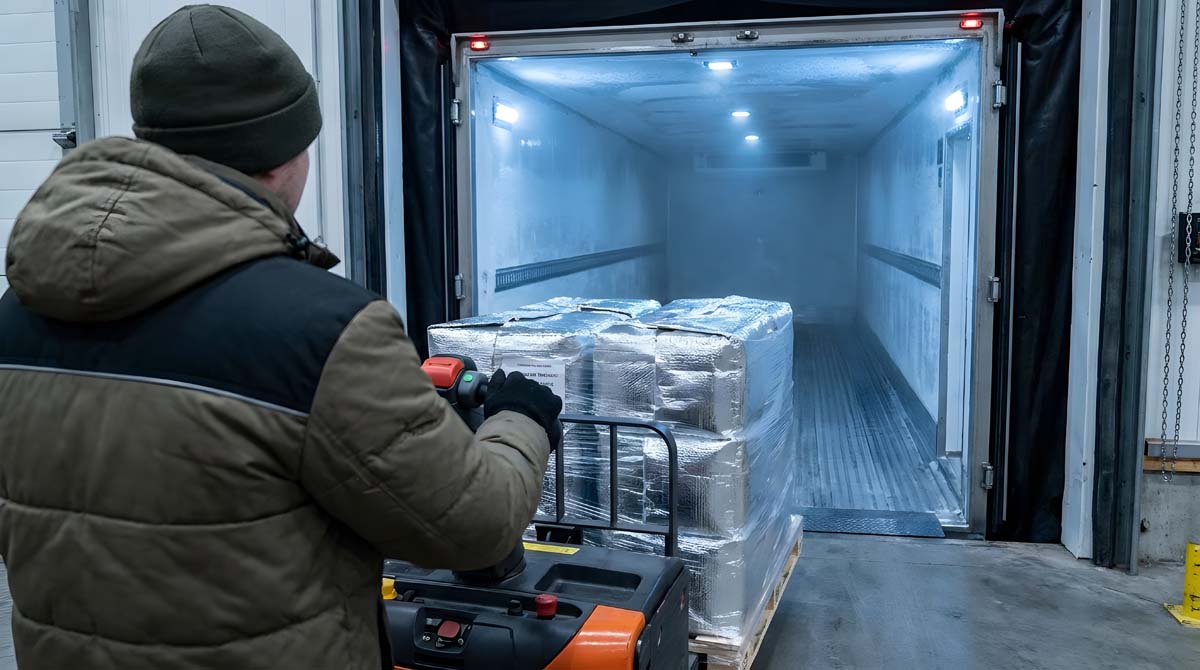
Storing food and beverage inventory carries risks that general warehousing does not. Product can be lost without anyone dropping anything. A shipment can look perfect and be unsellable. A supplier problem three steps upstream can become your recall.
Managing that is mostly a matter of controlling a handful of specific failure modes. These are the ones that actually cause losses in Alberta, and what a well-run facility does about each.
Temperature excursions are the most common loss
Most temperature damage does not happen in storage. It happens in the gaps: a trailer waiting at a dock, a transfer between buildings, a refrigeration unit that fails overnight when nobody is on site.
The controls that matter are continuous monitoring with alarms rather than spot checks, staged dock scheduling so temperature-sensitive loads are not left waiting, and documented procedures for what happens when a threshold is breached. A facility offering refrigerated warehousing should be able to show you the monitoring records for the last quarter without hunting for them.
Alberta winters create a risk most operators underestimate
Freeze damage gets far less attention than heat damage and costs Alberta shippers a great deal every year. Beverages, liquids, and water-based products can freeze in an unheated trailer or on an exposed dock in a matter of hours at minus 25.
Protection means heated dock levellers and sealed doors, trailers that are pre-conditioned rather than loaded cold, and scheduling that does not leave a loaded trailer parked overnight in January. It also means knowing which of your SKUs are actually freeze-sensitive, because that list is usually longer than people assume.
Traceability decides how bad a recall gets
When a recall happens, the only question that matters is how precisely you can identify affected product. A facility capturing lot codes and production dates at receiving, tracking them through storage, and recording them on outbound shipments can isolate a specific lot. A facility that only tracks SKUs has to pull everything.
That difference is measured in hundreds of thousands of dollars. It is also why SQF and HACCP certified operations run mock recalls on a schedule, testing whether they can trace a lot forward and backward within a set time rather than assuming they can.
Sanitation, pest control and allergen separation
These three run together because they are all failures of physical discipline rather than technology. Documented cleaning schedules, a contracted pest program with logged inspections, and physical separation of allergen-containing product are the baseline. Auditors check the records as closely as the building.
The practical test when you tour a facility is whether the documentation is current and the staff can explain the procedures without referring to a binder. A clean floor on the day of your visit proves less than a sanitation log with no gaps in it.
Alcohol carries a separate compliance layer
Beer, wine and spirits sit under excise rules in addition to food safety ones. Storing them requires an excise licence, and the reporting, security and inventory reconciliation obligations that come with it are strict. Errors here are a compliance problem rather than a product problem, and they are not resolved by writing off inventory.
Shrink, damage and the things insurance will not cover
Physical loss comes from handling damage, mis-picks that never get reconciled, and theft. The controls are unexciting: scan-confirmed movements, cycle counting frequent enough to catch variances early, restricted access to high-value product, and camera coverage of dock areas.
Worth checking separately is what your policy and the warehouse agreement actually cover. Standard warehouse liability is often far narrower than shippers expect, and the limit is frequently stated per pound rather than per dollar of value. That is a conversation to have before a claim, not during one.
What to verify before signing with a facility
When you tour a warehouse in Calgary, these are the items worth confirming in writing:
- Current SQF or HACCP certification, with the most recent audit report and any corrective actions
- Temperature monitoring method, alarm thresholds, and after-hours response procedure
- Freeze protection at docks and for staged outbound loads
- Lot code capture at receiving and on outbound documentation
- Mock recall frequency and the traceability time achieved
- Pest control contractor, inspection frequency, and access to logs
- Excise, bonded or sufferance licensing if your products require it
- Warehouse liability limits and how they are calculated
A facility that handles food properly will have all of this ready. Hesitation on any of it is information.
Talk to our Calgary food and beverage team
Our Calgary facility is a food-grade, excise-licensed operation built for Western Canada distribution, and it is part of a national network handling food, beverage and alcohol for major Canadian retailers. Call 778-873-2850 or request a quote to discuss your requirements.