

 1-877-999-8489


2026
Calgary's Role in Canada's National Supply Chain Network
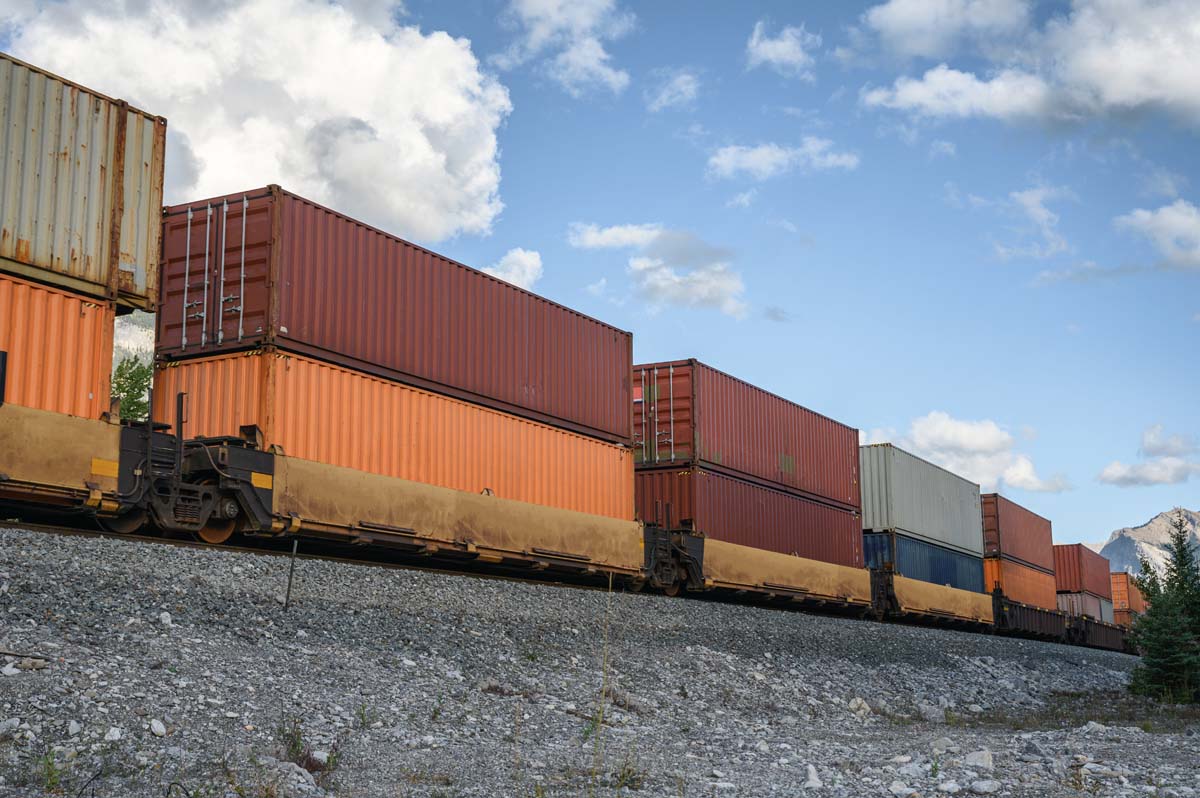
Calgary is known for energy, for the Stampede, and for a downtown skyline that grew up fast. It is less often described as one of the most important logistics cities in the country, which is odd, because on any given weekday an enormous share of what Western Canada consumes passes through or near it.
Here is what actually makes the city work that way.
Geography did most of the work
Calgary sits at the junction of the two corridors that carry western freight. The Trans-Canada Highway runs east and west through the city, connecting the Port of Vancouver on one end to Regina, Winnipeg and everything beyond on the other. Highway 2, the Queen Elizabeth II, runs north to Edmonton and south to the Montana border and the American interstate system.
That position means Edmonton, Saskatoon, Regina, Lethbridge and the BC interior are all inside a one-day truck run. Vancouver and Winnipeg are two. Very few Canadian cities can reach that much of the country that fast, and none of the others are in the West.
Rail made Calgary before trucking did
The city exists in its current form because of the railway, and the relationship never ended. Calgary is the headquarters of Canadian Pacific Kansas City, whose network now runs from Canada through the United States into Mexico, and the city functions as a major intermodal terminal where containers transfer between rail and road.
That matters for cost as much as for history. Long-haul freight moving by rail and transferring to trucks for regional delivery is substantially cheaper per tonne-kilometre than trucking the whole distance. Calgary is one of the points where that transfer happens at scale.
The inland port that grew north of the city
Anyone who has driven north on the QEII in the last fifteen years has watched the warehouse corridor through Balzac and Rocky View County appear. The growth is not an accident. Land costs less than in the Lower Mainland, the road access is immediate, the rail is close, and the region has the workforce.
The practical effect is that a large share of the consumer goods sold in Western Canada now spend time in a building in that corridor before they reach a store or a doorstep. It is an inland port in everything but name.
Calgary International is part of it too
YYC handles significant air cargo volume, which covers the freight that cannot wait for ground transport. Pharmaceuticals, medical supplies, high-value electronics, urgent industrial parts and perishables all move this way. Air freight is a small share of total tonnage and a much larger share of total value.
What moves through, and who it matters to
The mix is broader than most people assume. Food and beverages heading to grocery chains across the West. Consumer goods bound for retail and for direct-to-consumer delivery. Building materials feeding construction across Alberta. Agricultural inputs and outputs moving in both directions. Energy sector equipment, much of it oversized and requiring specialized transport. Beer, wine and spirits moving under excise control.
For local businesses, the benefit is straightforward. A Calgary company selling across Western Canada has a structural advantage in freight cost and transit time that a company shipping from Toronto or Vancouver simply does not have, and the range of industries served from the city keeps widening because of it.
It runs on people, not just infrastructure
Warehousing and transportation employ tens of thousands of Albertans, and the roles are more varied than the stereotype suggests. Dispatchers, drivers, forklift operators, quality compliance staff, inventory analysts, maintenance technicians and customs specialists all sit somewhere in the chain between a factory and a shelf. Our own Calgary facility is part of that, and has been since we opened our first Alberta building in 2013.
Why the city keeps getting more important
Two trends are pushing in the same direction. E-commerce has raised the expectation that most of the country can be reached in one or two days, which only works with inventory distributed across several regions rather than concentrated in one. And the disruptions of recent years taught a lot of companies that a single distribution point is a single point of failure. Both arguments end at the same place: a national network with a strong western node.
Calgary was going to be that node regardless. The map decided it long before anyone built a warehouse here.