

 1-877-999-8489


2026
3PL Calgary: How to Scale Distribution Across Western Canada
Plenty of Canadian brands start out shipping everything from one building. It is simple, it is cheap, and it works right up until the point where transit times and freight costs start deciding which customers you can profitably serve.
For companies selling across Western Canada, Calgary is usually where the second node goes. Here is why, and how to tell when it is time.
Why Calgary sits where distribution wants to be
Calgary is the intersection of the two road corridors that carry most western freight. Highway 1 runs east and west through the city toward Vancouver on one side and Regina and Winnipeg on the other. Highway 2 runs north and south through Edmonton and down to the Montana border. Very little moves across the Prairies without passing through or near the city.
Rail reinforces it. Calgary is a major intermodal point, and the city has functioned as an inland port for decades, which is why the industrial growth around Rocky View County and Balzac has been so concentrated. From a Calgary warehouse, Edmonton, Saskatoon, Regina and the BC interior are inside a one-day truck run, and Vancouver and Winnipeg are comfortably reachable in two.
The single-warehouse ceiling
Shipping nationally from one location produces a predictable set of symptoms. Freight costs rise faster than revenue because every order travels a long distance. Delivery promises get vague because transit times vary enormously by destination. Customers in the regions furthest from the warehouse quietly become unprofitable, and nobody notices until someone runs the numbers by province.
There is also a risk concentration issue. One building means one fire, one flood, one labour disruption, one closed highway between you and every customer you have.
What a second node actually changes
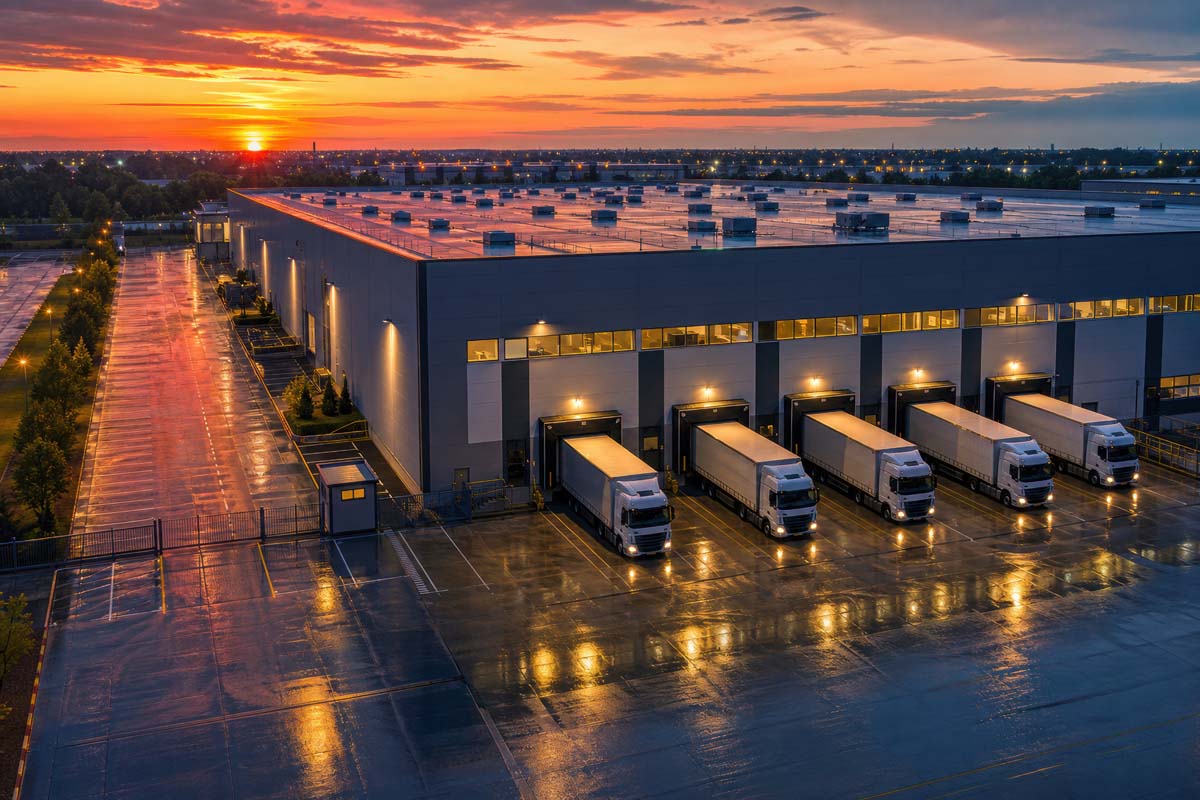
Splitting inventory between a coastal facility and a Calgary 3PL warehouse changes the arithmetic on both cost and speed. Orders ship from whichever location is closer, which shortens transit and drops the freight rate at the same time. Our Rocky View County facility runs over 200,000 square feet with 30-plus loading docks and a gated yard, sized for high-volume distribution across the West from a single site.
The replenishment freight between locations matters as much as the facilities themselves. When the same company owns the warehouses and the trucks moving stock between them, there is no third carrier to coordinate and no gap in visibility while product is in transit.
When to add the second location
Timing this badly is expensive in both directions. These are the signals that usually mean the move is overdue:
- Freight cost per order is climbing while order value stays flat
- A meaningful share of your customers sit more than two ground days from your warehouse
- You are paying for expedited shipping regularly to meet delivery promises
- Your current building is above roughly 85 percent utilization at peak
- You are turning down or deprioritizing customers in a region because serving them does not pay
- A single disruption at your one facility would stop all shipping
If two or three of those are true, the question is no longer whether to add capacity but where.
Matching freight mode to the lane
A western network only pays off if the freight strategy moves with it. Full truckload makes sense for replenishment between facilities. Less than truckload covers regional distribution to retailers. Intermodal rail becomes attractive on the long Calgary to Toronto or Calgary to Vancouver legs where transit time is less critical than cost. Getting the transportation mix right is often worth more than another point of warehouse efficiency.
Regulated products need the licences in place first
If you handle food, beverage, alcohol or imported goods, the second location has to be able to receive them legally before the first pallet arrives. That means food-grade warehousing under SQF and HACCP where required, excise licensing for beer, wine and spirits, and bonded status for goods that have not cleared customs. Discovering a licensing gap after the inventory has shipped is an expensive way to learn this.
How a launch usually runs
A well-planned node goes live in stages rather than all at once. Inventory is analyzed by destination to decide what stock belongs in which building. A subset of SKUs moves first, usually the fastest movers with the widest western distribution. Systems are configured so orders route to the correct facility automatically. Then volume shifts across over several weeks while both locations run in parallel.
Done this way, the change is invisible to customers, which is the entire objective.
Talk to our Calgary team
We have operated in Alberta since 2013 and run distribution from Calgary as part of a national network with facilities in British Columbia, Manitoba, Ontario and Nova Scotia. Tell us where your customers are and what you ship, and we will show you what a western node would do to your freight costs. Call 778-873-2850 or request a quote.