

 1-877-999-8489


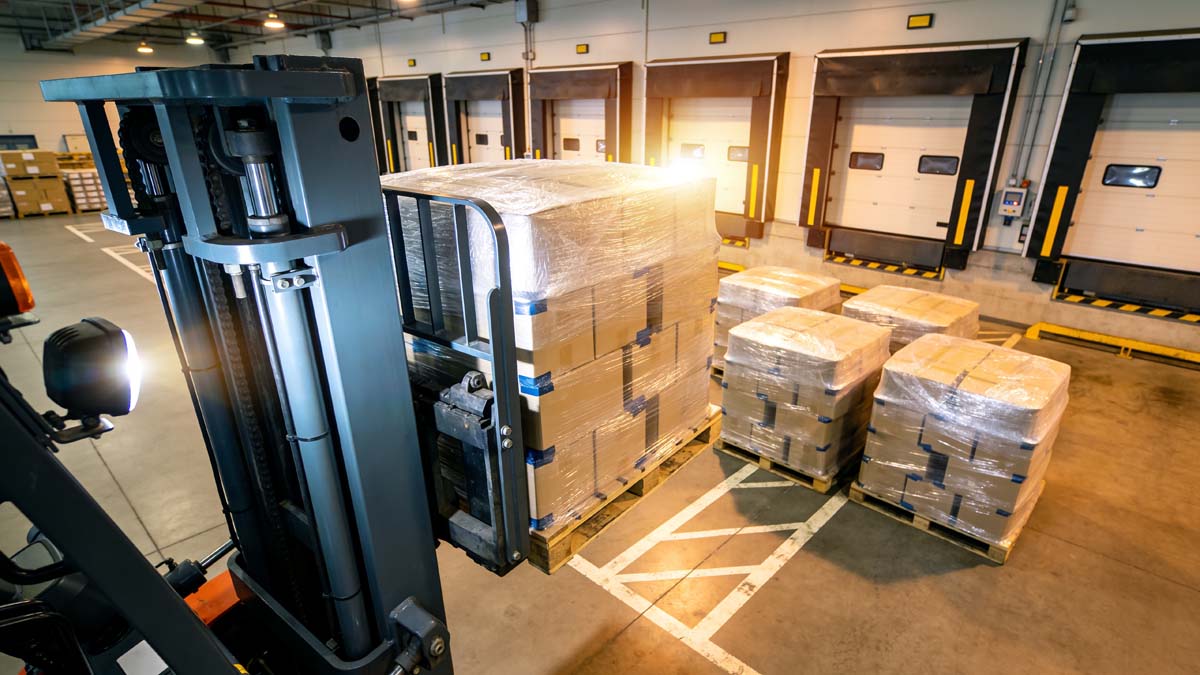
Almost all of it traces back to decisions made in the few minutes a pallet is being wrapped and prepared, which is the step most often treated as an afterthought.
Shrink and Stretch Are Not the Same Thing
The terms get used interchangeably in conversation and they describe different processes with different uses.
Stretch wrapping applies film under tension around a load. The film's elastic recovery is what holds the load together, and the containment force it generates is the whole point. It is the standard method for securing palletised freight.
Shrink wrapping places a film over the load and applies heat so the film contracts tightly around it. It produces a sealed, weather-resistant covering rather than a tensioned band, which makes it the right choice for protecting product from moisture, dust and pests, for outdoor or yard storage, and for presenting bundled units as a sellable pack.
Many retail shipments need both: stretch wrap for stability and a shrink or hood treatment for protection. Specifying one when you needed the other is a common and expensive mistake.
Containment Force Is the Number That Matters
Pallet stability is a measurable property, not a judgement call, and the measure is containment force: how hard the film holds the load to the pallet.
Four things determine it. Film pre-stretch, meaning how far the film is elongated before it is applied, which governs both strength and how much film is used. The number of wraps and where they are placed. The wrap pattern, particularly how many revolutions lock the bottom tier to the pallet itself. And the film specification, which has to match the weight and shape of the load.
Under-wrapping is the obvious failure and it is not the most common one. Over-wrapping is nearly as damaging, because excessive force crushes cartons at the corners and on the bottom tier, and the damage is often not visible until the load is broken down at the receiver.
Getting this right is the difference between a load that survives four handling cycles and one that survives two.
What a Load Needs Beyond Film
Film holds a load together. It does not fix a load that was built badly.
Column stacking, where cartons sit corner to corner in vertical columns, carries far more weight than interlocked stacking, because corrugated strength is concentrated at the corners. Interlocking looks more stable and sacrifices a large share of the compression strength. Which one is right depends on the carton and the stack height, and it should be a decision rather than a habit.
Beyond the stack, corner boards distribute film tension and protect carton edges, a top sheet keeps dust and moisture off the top tier, slip sheets separate layers that would otherwise abrade, and banding or strapping secures heavy or irregular items that film alone will not hold. Overhang is the quiet killer: cartons extending past the pallet edge lose most of their compression strength and are the first thing a forklift catches.
Retailer Requirements Are Not Suggestions
Major Canadian retailers publish routing and packaging guides, and the specifications in them are enforced through deductions rather than through conversation.
The requirements typically cover maximum pallet height including the pallet, maximum weight, permitted pallet type and condition, how cartons must be marked and where labels must sit, whether the load may overhang, and what shipping documentation must accompany it. Some specify film requirements directly, and most require that the load be stable enough to be moved without restacking.
A shipment that fails any of those can be deducted against, refused at the door, or accepted with a chargeback that appears on a remittance weeks later. For a supplier with thin margins, repeated deductions can erase the profit on an entire programme.
This is the clearest argument for having the work done by people who already ship to those retailers. Commercial packaging done to the retailer's actual specification rather than to general good practice is worth considerably more than it costs.
Where Damage Actually Happens
Knowing the failure points makes the specification obvious:
- Terminal handling on LTL shipments, where a pallet is loaded, unloaded and restacked several times by people who do not know what is in the cartons
- Forklift contact, which is why overhang and loose bottom tiers cause disproportionate damage
- Vibration in transit, which loosens an inadequately tensioned load over a long haul and lets the stack shift
- Stacking in the trailer, where a load without sufficient compression strength takes the weight of whatever is placed on it
- Moisture, from yard storage, dock exposure or a trailer that was not dry, which weakens corrugated quickly
- Temperature swings in Alberta, which move moisture into and out of cartons and film across a single trip
The last two matter more here than in milder parts of the country, and they are the reason outdoor-staged freight in this region benefits from a sealed covering rather than tension alone.
Doing It Where the Inventory Already Sits
There is a practical argument for having packaging done at the warehouse rather than at the plant or a separate facility.
Product packed at the point of manufacture is committed to a configuration before anyone knows which customer or channel it is going to. Packed at the distribution point, the decision is made when the order exists, which means the right retailer specification is applied the first time and nothing is reworked.
It also removes a freight leg and a handling cycle. Product that travels to a co-packer and then to a warehouse pays for both. Co-packing carried out in the building where the goods are stored avoids that entirely, and makes short runs and promotional work economic in a way they otherwise are not.
It is also where display work belongs. A pallet display built to a retailer's specification has to arrive intact or it is worthless, and building it close to the point of shipment is the simplest way to ensure that.
Talk to Our Calgary Team
18 Wheels has been warehousing, co-packing and moving freight for Canadian businesses since 1989. Our Rocky View County facility offers more than 30 bay doors, a secured gated yard and SQF and HACCP certified food grade space, with shrink wrapping and the rest of our packaging work carried out in the same building the inventory is stored in.
Tell us what you ship, which retailers you ship to and where you are seeing damage or deductions, and we will tell you what the load actually needs. Call 587-332-5252.